
WarFrontline — The Story Behind

Warfrontline– Introduction and Basics
If you’re searching for a WWII browser strategy game, an online strategy game, or a browser-based strategy game that actually lets thousands of players fight the same war together, this post is for you . I’m Dawid — programmer, lifelong strategy fan, and the solo builder of WarFrontline
. Below I’ll share why I’m creating this World War II strategy game, the design decisions that shaped it , the games that inspired me
, and how WarFrontline differs from any other war strategy game you’ve tried. You’ll also find transparent details about what’s playable now, what’s next, and who I am — because trust and real experience matter as much as features
.
Below is the story of why I’m making this game , the design principles behind my decisions, the inspirations I’m standing on, and how WarFrontline differs from any other strategic war game you might have tried.
Why I’m Building WarFrontline
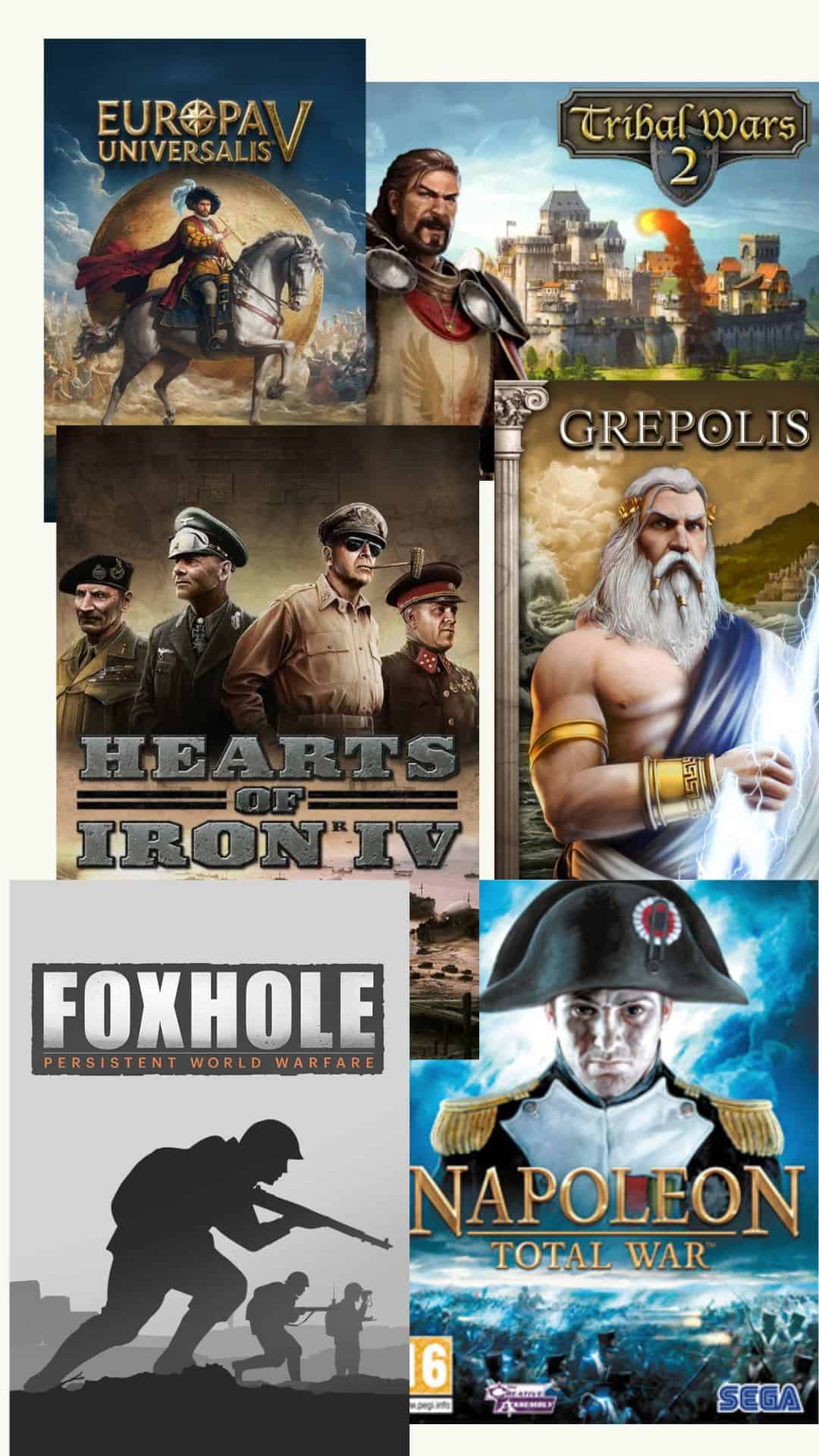
I started WarFrontline because I wanted to play this exact kind of game with other people — not for a weekend, not in isolated matches, but together, continuously, on one big map where our combined actions move the frontline and write history. I loved classics like Grepolis, Tribal Wars (Plemiona), and OGame for their social scale, but they tended to narrow the experience to conquering someone’s city rather than building a common war effort. I loved Paradox titles (Europa Universalis, Hearts of Iron) for depth, but long-running, massively coordinated wars are hard there; sessions are short, hosted, and often limited by practical constraints. And then there’sFoxhole, which proved how powerful it is when thousands of players share goals and roles in one persistent war. WarFrontline is my attempt to combine those worlds: a living, persistent war with deep strategy and real teamwork, built for browsers and mobile from day one.
I’ve been coding for years, playing strategy for longer, and I’m eager to keep evolving the game with the community. I expect it will especially resonate with strategy diehards and WWII enthusiasts — and that’s okay. The aim is months-long campaigns and a war that keeps breathing as players discover new tactics, economies, and alliances.WarFrontline is my attempt to combine social scale with strategic depth: one living WWII map, many specialized player roles, deep interdependence between economy and warfare — and the convenience of the browser and mobile so you can participate anywhere. That’s the experience I’m building for strategy diehards and WWII enthusiasts who want a campaign that breathes for months, not hours.
⚔️ Join the Battle – Play WarFrontline Now!
The battlefield is open, Commander! WarFrontline has entered open testing — and now it’s your turn to take command. Join thousands of players testing the next-generation war strategy game. Build your army, forge alliances, and dominate the frontlines in real time. Be part of the early community shaping the future of WarFrontline. Sign up now, play instantly, and earn exclusive rewards available only during open testing.
Don’t wait — the war has begun. Lead your nation to victory today!Vision: one living frontline everyone can move
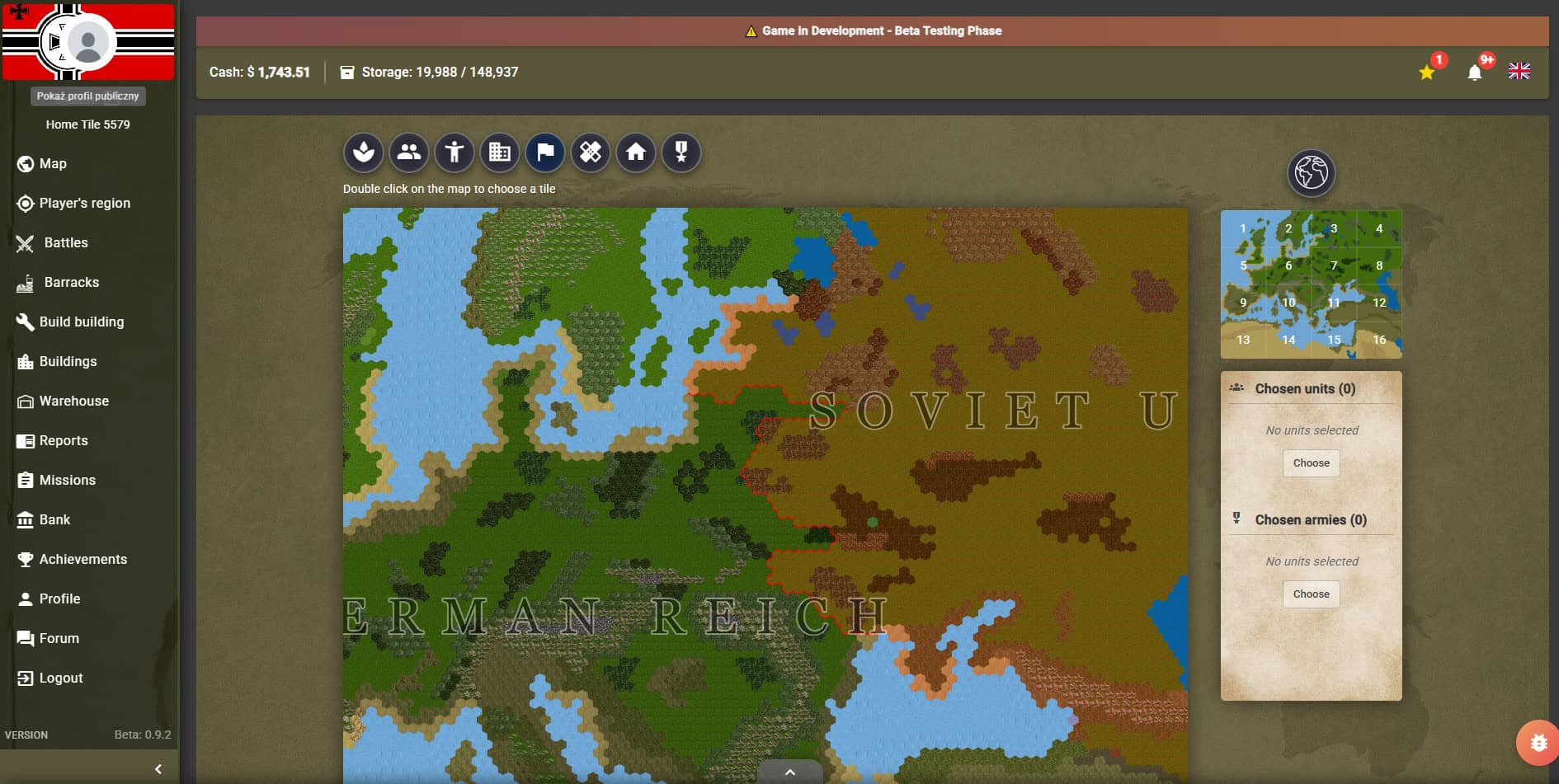
At the core of WarFrontline sits a single, shared hex map representing a living WWII front. Every tile matters. Borders shift as players attack, reinforce, and counterattack; alliances form and fracture; and logistics can decide a war as surely as tanks. Unlike games where each player runs an entire country in isolation, you manage a region inside a nation alongside other humans — pooling strength, coordinating transport, and feeding a common war effort. The first long campaign begins on the Eastern Front at Operation Barbarossa.
01.
One shared hex map
the battlefield is a massive hexagonal grid; every tile matters.
02.
Region-first gameplay
specialize your region’s economy, balance finances, and feed the war machine.
03.
Frontline warfare and team strategy
end units to active fronts, reinforce battles phase by phase, and coordinate logistics, intel, and diplomacy with other humans.
You can choose a side — push deep into Soviet territory as Germany or defend the Motherland as the USSR — and your campaign choices (fast blitz, fortified defense, counteroffensives) play out in real time on the living map.
Three ways to play: Builder, Warrior, Hybrid
From day one I wanted to support different player archetypes so everyone can contribute to victory in their own way:
Builder — for players who love developing and optimizing: grow your region, construct industrial chains, and scale national power. Prefer a change of scenery? You can even return a developed region to the state for compensation and start fresh elsewhere.
Warrior — for those who crave battles and territorial gains: push the line, join battles others have opened, or defend what your nation already holds. Your actions literally move the frontline.
Hybrid — the most popular path: build smart and fight hard. It’s often the most satisfying approach because it drives both economic and territorial growth for your country.
What makes this browser strategy game different
Lots of strategy games promise scale. WarFrontline earns it by making everything revolve around a shared front and real player interdependence.
A truly shared campaign — not dozens of shards, not short sessions. One living WWII map that everyone pushes or defends together.
Region-level identity — you’re one region in a nation of players, which creates real interdependence (industry, supply, reinforcements) instead of solo empires.
Alliance-centric meta — coalitions plan operations, negotiate, and execute large maneuvers; diplomacy is a strategic weapon, not just a chat window.
Browser + mobile, no installs — log in from anywhere; place orders on your phone, fight the evening offensive on PC.
Player-driven economy — open markets, state demand, and financial management tie your factories to the front in tangible ways.
Inspirations & design DNA
WarFrontline draws from grand strategy and MMORTS staples: Europa Universalis, Victoria, Hearts of Iron for historical scope, and Tribal Wars/Grepolis for massive social campaigns. But instead of “your city vs my city,” the anchor is our national front — the line that thousands of us are pushing together. The opening theater is the Eastern Front at Operation Barbarossa, a setting that stresses both operational tempo and logistical endurance — perfect for a game about regional economies powering a single, persistent war.
Economy, terrain, and logistics — where depth actually matters
WarFrontline’s economy is largely player-driven. There’s an open market for trading materials and products inside your country, and the state also buys and sells based on national needs. You can delegate production oversight and material transfers between warehouses and buildings (for a fee) if you prefer strategic planning over micromanagement.
Buildings divide into production, extraction, and military; each consumes inputs to keep running.
Areas have unique characteristics that affect both unit performance and economic output. Where a tile holds a strategic resource, extraction gets a significant boost.
Terrain shapes battles — the same army performs differently across ground types, making map literacy and supply planning essential.
Finances determine whether your region can support a big push now or must invest in growth first; efficient warfare and conquest are rewarded by the state because real victories cost real resources.
In practice, that means operations are prepared days in advance: industrialists promise outputs, logisticians schedule transfers, and coalition officers align attack windows so supply lines don’t break mid-offensive. When things click, the frontline moves — and your nation can feel it.

Technology choices: why the browser and mobile matter
WarFrontline is browser-based and mobile-ready because coordination should be frictionless. Strategy players shouldn’t be gated by heavyweight installs; they should be able to check production at lunch, approve logistics on the commute, and fight a set-piece battle at home. The tech choice supports the persistent-war fantasy: you’re always one login away from the front.
Why this World War II strategy game is personal
I’m building WarFrontline because I wanted to play it myself: a persistent WWII war where everyone’s contribution matters 🗺️, not just the top attackers. I’ve coded for years and played strategy even longer, and I’m excited to evolve the game with the community — especially the players who enjoy long campaigns, logistics puzzles, and coordinated operations. If that’s you, you’ll feel at home 🙌.
But it goes deeper than preference. I grew up loving systems that remember what you did yesterday 🧠 — maps that scar, economies that buckle or boom based on real choices, alliances that mean something beyond a chat badge. In many “war strategy games,” great moments happened in spite of the design; logistics were a spreadsheet off to the side 🗃️, diplomacy lived in Discord, and the front moved only when a few whales logged in. WarFrontline is my answer to that: a WWII browser strategy game where supply lines, terrain, weather, morale, and human timing are not background noise — they’re the game 🎯.
Personally, I’m obsessed with the in-between: railheads being pushed forward one hex at a time 🚂, fuel convoys that barely make a window ⛽, an alliance that chooses restraint for three days to strike on the fourth ⏱️. Those little operational truths are why I prototype tools for quartermasters and scouts with the same care as I do for tank commanders. If you like winning because you prepared better — not because you clicked faster — we speak the same language.
I’m also honest about failure ⚠️. Early tests broke spectacularly: markets overheated, fronts stalled, and one patch made artillery too cheap. Each stumble clarified the design: transparency beats mystery, teamwork should outscale solo grind, and browser-first access is how we keep the war truly persistent 🌐. That is the heart of this World War II strategy game: a living campaign shaped by thousands, where clever planning and good citizenship matter as much as daring offensives — the kind of battlefield I’ve always wanted to come home to after work and still find alive 🛡️.

What’s playable today — and what’s next
MVP / Web Alpha focus:
-
Regional economy & building
-
Dynamic armies on a shared frontline
-
Live hex map with shifting borders
-
New in-game tutorial for first-time players
-
Web build (browser) with mobile support
I've announced alpha tests so early players can join and shape the battlefield with feedback. The public web alpha opens around the start of the main campaign for followers.
Near-term roadmap: prioritize better battle visuals (the Diorama Skirmish layer), deeper strategy (logistics, fortifications, intel), and bigger campaigns without pay-to-win — with optional cosmetic rewards for pre-launch followers/backers. You’ll help vote on what ships next.
FAQ
What is WarFrontline in one sentence?
Afree-to-play WWII browser strategy game where thousands of players push one shared, living frontline by running regions, wrangling logistics, and teaming up in alliances — all from your browser. Short, sweet, and very explodey (strategically).
How is it different from other WWII and online strategy games?
Most games split players across tons of shards or quick matches. WarFrontline puts everyone into one persistent war. You don’t play an isolated empire; you run a region inside a nation, next to other players doing the same. That means real interdependence: your factories feed someone else’s offensive; their rail upgrades make your supply lines work. Alliances aren’t just chat rooms — they’re where operations get planned, intel is traded, and timetables actually matter. Fewer lobbies, more history being written together.
Is it pay-to-win?
Nope. No wallet-warriors steamrolling your hard work. My focus is on clarity in battles, deeper systems (logistics, fortifications, intel), and cosmetic goodies for early supporters. Cosmetics = flair; power = earned. If you win, it’s because your planning, timing, and teamwork were better — not your credit card.
Which roles can I play?
Designed three archetypes so everybody can matter:
Builder — the economy brain. You scale industry, balance finances, and keep the front fueled.
Warrior — the tip of the spear. You open battles, plug gaps, time the counterpunch, and literally move the line.
Hybrid — most popular combo. Build smart and fight hard, riding that beautiful loop where your factories empower your offensives.
Whichever you pick, you’re contributing to national victory. No “busywork roles” here.
Does terrain or resource location matter?
Absolutely. Tiles have unique traits that influence combat performance and production output. Forests, plains, cities — they all play differently. Areas with strategic resources supercharge extraction if you build there. Translation: the map matters. Choosing where to fight (or build) is half the battle.
Is there a functioning market or economy?
Yes — and it’s mostly player-driven. You’ll trade materials and products inside your country, while the state also buys/sells based on national demand. Don’t feel like micromanaging every crate? You can delegate material transfers and production oversight for a small service fee. It’s capitalism with a dash of wartime planning (and fewer spreadsheets). – still in develop
Where does the first campaign take place?
We start on the Eastern Front at Operation Barbarossa. Pick a side — Germany or the USSR — and get ready for a long, bruising campaign where timing, supply, and terrain are everything.
Can I play on mobile?
Yep. It’s browser-based and mobile-friendly, so you can approve logistics on your phone, then jump on PC later for the evening offensive. No installs, no 60-GB patches, just strategy on tap.
How long does a campaign last?
Think weeks to months, not hours. It’s a living war that breathes with your community’s momentum. You can dip in daily and still feel your impact over time.
Can I play on mobile?
Not at all. Builders can queue production and check in during breaks. Warriors can plan around operation windows announced by alliances. Hybrids do a bit of both. It’s more about smart timing than 24/7 grinding.
Do I need a ton of time every day to be useful?
You can play solo and make progress — especially as a Builder — but WarFrontline shines when you coordinate. Even light alliance participation (sharing intel, syncing reinforcements) pays off in a big way.
Can I play solo, or do I need an alliance?
You can play solo and make progress — especially as a Builder — but WarFrontline shines when you coordinate. Even light alliance participation (sharing intel, syncing reinforcements) pays off in a big way.
⚔️ Join the Battle – Play WarFrontline Now!
The battlefield is open, Commander! WarFrontline has entered open testing — and now it’s your turn to take command. Join thousands of players testing the next-generation war strategy game. Build your army, forge alliances, and dominate the frontlines in real time. Be part of the early community shaping the future of WarFrontline. Sign up now, play instantly, and earn exclusive rewards available only during open testing.
Don’t wait — the war has begun. Lead your nation to victory today!